Quick answer
 Quick answer
Gutters overflow for four reasons: the gutter is blocked, the downpipe is blocked, the gutter has sagged out of fall, or the rain is heavier than the gutter can carry. Where the water comes over tells you which. Along the whole run points at the gutter. At one end points at the downpipe.
Key highlights
 Key highlights
- Overflow along the whole gutter usually means the gutter itself is packed
- Overflow at one end only usually means the downpipe is blocked
- Water behind the gutter, against the wall, points at fall or a bad seal
- In Perth the debris load builds through summer and the rain finds it in winter
- Most overflow is a cleaning problem, not a plumbing one
Why are my gutters overflowing?
Gutters overflow because water is arriving faster than it can leave. There are only four reasons for that, and you can usually work out which one you have without going up a ladder.
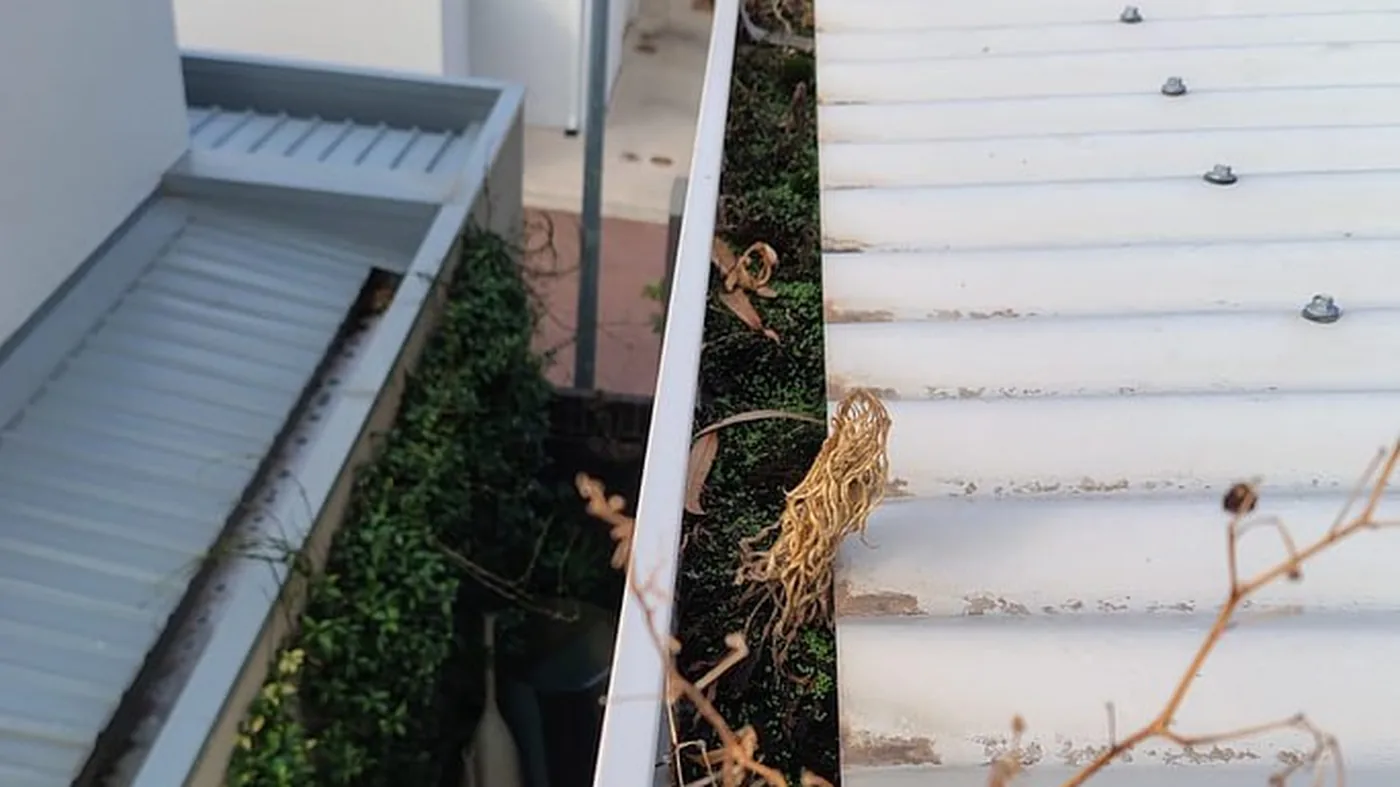
The most common by far is a blocked gutter. Leaves, bark, seed pods and roof grit pack down into a wet mat that fills the channel, so the water has nowhere to go but over the front edge.
The next is a blocked downpipe. The gutter itself may be reasonably clear, but the outlet is choked, so the run fills up like a bath with the plug in and spills at the low end.
- The gutter is packed with debris, so the channel has no capacity left
- The downpipe is blocked, so the water backs up and spills at one end
- The gutter has sagged or was hung out of fall, so water sits instead of running
- The rain is heavier than the guttering was ever sized to carry
Is it the gutter or the downpipe?
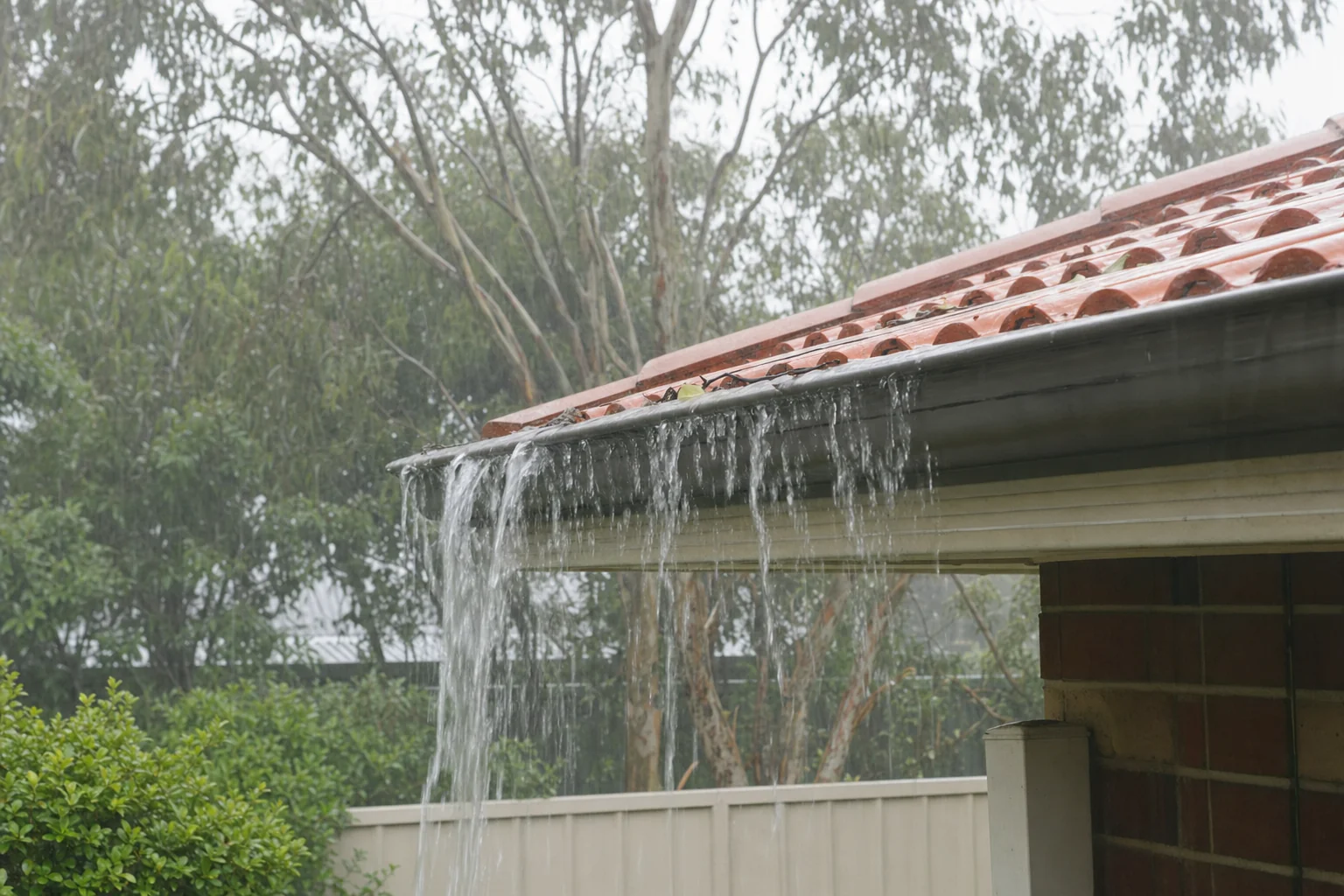
Watch where the water comes over. That single observation separates the two most common causes and it costs you nothing but standing outside in the rain for a minute.
If the water sheets over the front edge along most of the run, the gutter is full. If it comes over in one spot, usually the lowest end near a downpipe, and the rest of the run looks fine, the outlet is the problem.
If the water runs down the wall behind the gutter rather than over the front, that is a different fault again. It points at fall, a failed seal or a gutter pulling away from the fascia, and no amount of clearing will fix it.
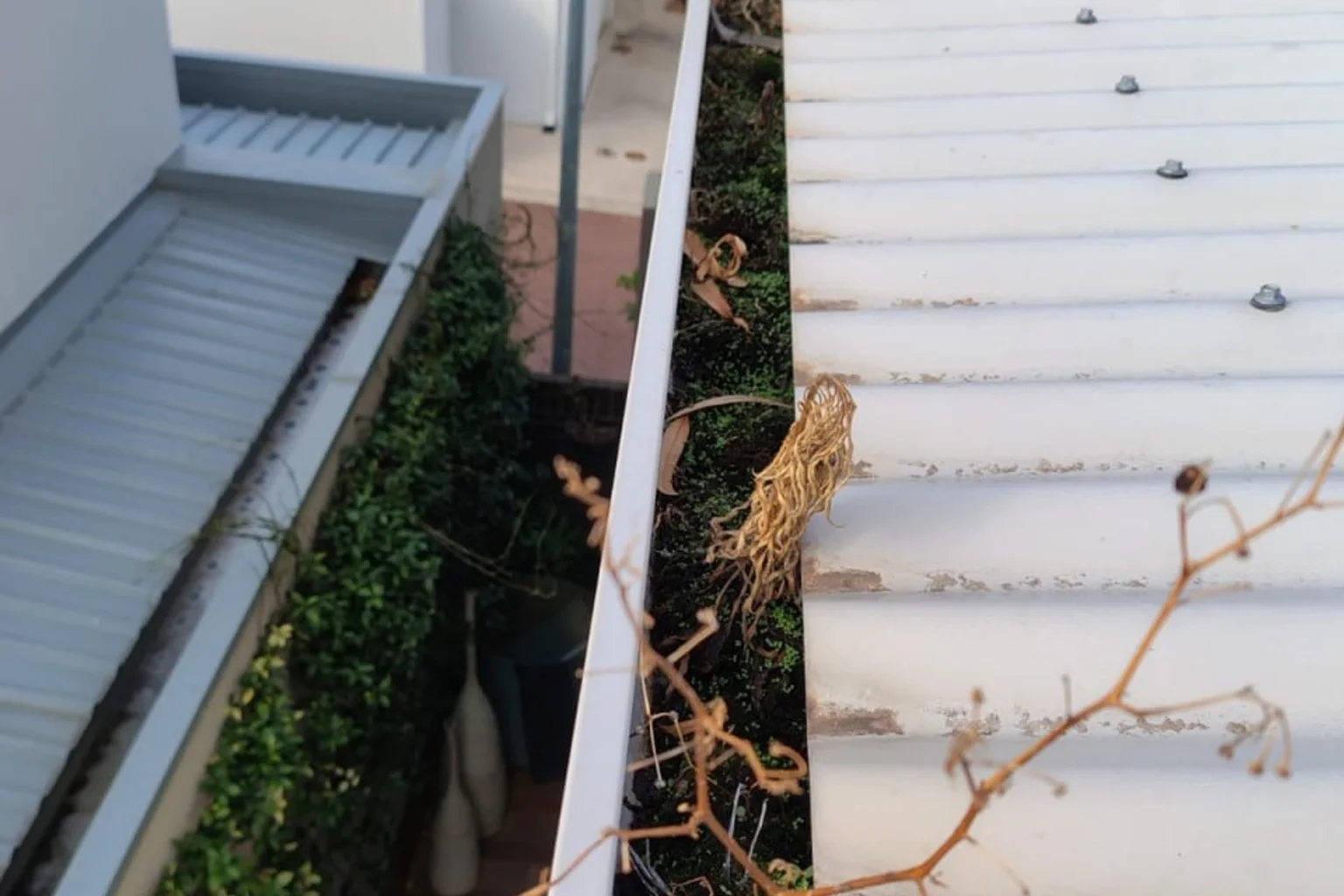
Water running down the wall, not over the front?
That is not a blockage. It usually means the gutter has moved or the seal behind it has gone, and it needs looking at properly rather than cleaning.
Why gutters overflow in heavy rain but not light rain
A part-blocked gutter copes fine with drizzle and fails in a downpour. Light rain trickles through whatever gap is left in the debris, so nothing looks wrong for months.
Heavy rain arrives faster than that gap can drain. The channel fills, the water finds the lowest point on the front edge and comes over in a sheet, which is why the first real storm of the season is when most people notice.
This is also why gutters that were fine last winter overflow this one. Nothing failed suddenly. The debris built up gradually through the dry months and the first heavy rain simply found it.
Why this happens on Perth homes
Perth loads gutters in one season and tests them in another. Gums and jarrahs drop leaves, bark strips and seed capsules through the hot months, and that material sits in the gutter drying and compacting with nothing to wash it through.
Then the winter rain arrives against a channel that is already half full. Homes under mature trees in the hills suburbs like Kalamunda and Darlington, or in the older leafy streets around Subiaco and Mount Lawley, collect enough in a single summer to block a run completely.
Bark is the part people underestimate. Long strips lie flat in the bottom of the gutter, hold water like a sponge and are far better at damming a downpipe outlet than leaves are.
Nothing failed suddenly. The debris built up through the dry months and the first heavy rain simply found it.
What overflowing gutters actually damage
The overflow itself is not the problem. Where the water ends up is.
Water coming over the front edge lands hard against the base of the wall, which is where it starts undermining footings and getting into brickwork. Water going over the back, between the gutter and the fascia, runs straight into the eaves and the roof timbers, and that is the version you do not see until a ceiling stains.
Full gutters are heavy too. A run packed with wet debris pulls on its brackets, and a gutter that has sagged never drains properly again even once it is cleared.
- Water pooling against footings and getting into brickwork
- Rot in fascia boards, eaves and roof timbers
- Stained or sagging ceilings where water tracks back inside
- Brackets pulling loose under the weight of wet debris
- Overflow washing out garden beds and paths below
How do you stop gutters overflowing?
If the cause is debris, and it usually is, a proper clean fixes it the same day. That means the gutters, the roof valleys and the downpipes cleared, not just the visible channel scooped out. A blocked downpipe left in place will have the gutter overflowing again in the next storm even if the run above it is spotless.
Gutter cleaning in Perth starts at $250 plus GST for a single-storey home and $360 plus GST for double-storey. If the gutters have sagged or come away from the fascia, that is a repair rather than a clean, and we will tell you that rather than clean around it.
If it keeps happening, the answer is timing rather than effort. A maintenance plan clears the load before the rain arrives instead of after it, which is the difference between a routine clean and an emergency one in the middle of a storm.
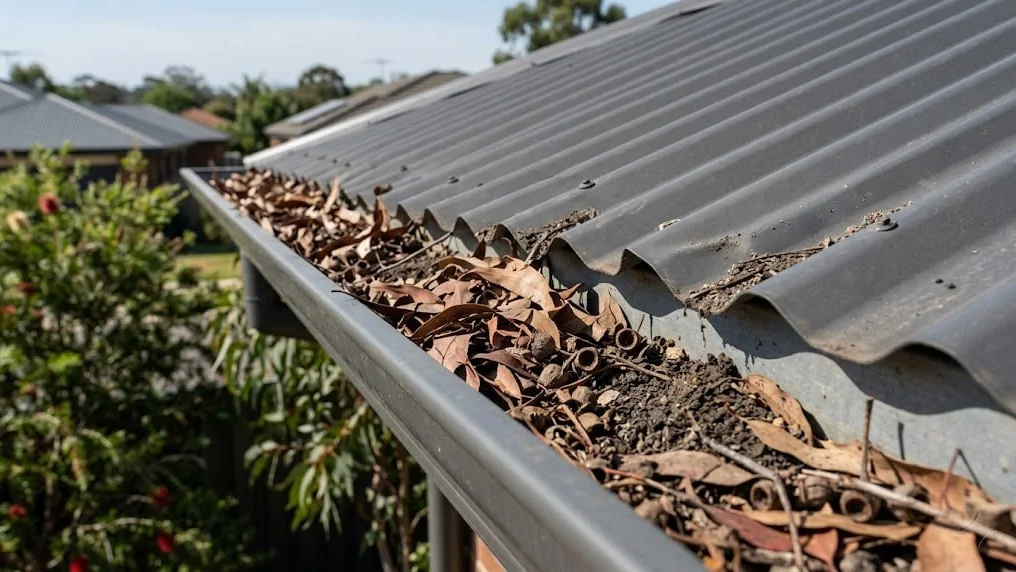 Before
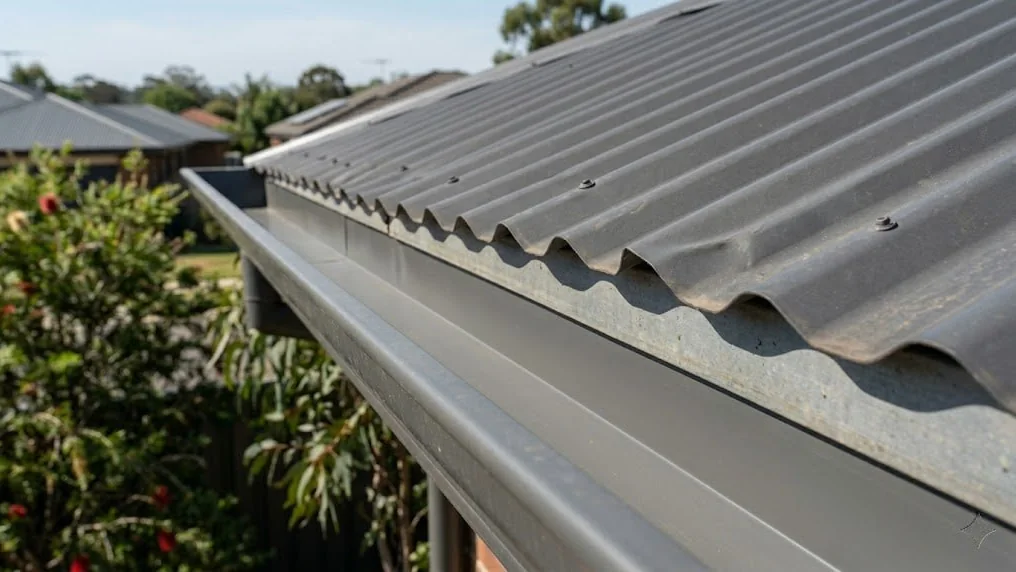 After
AfterCan I check it myself?
You can do the diagnosis from the ground, and that is the part worth doing. Stand outside during real rain and watch where the water comes over. Check whether it is one spot or the whole run, and whether it goes over the front or down the wall behind.
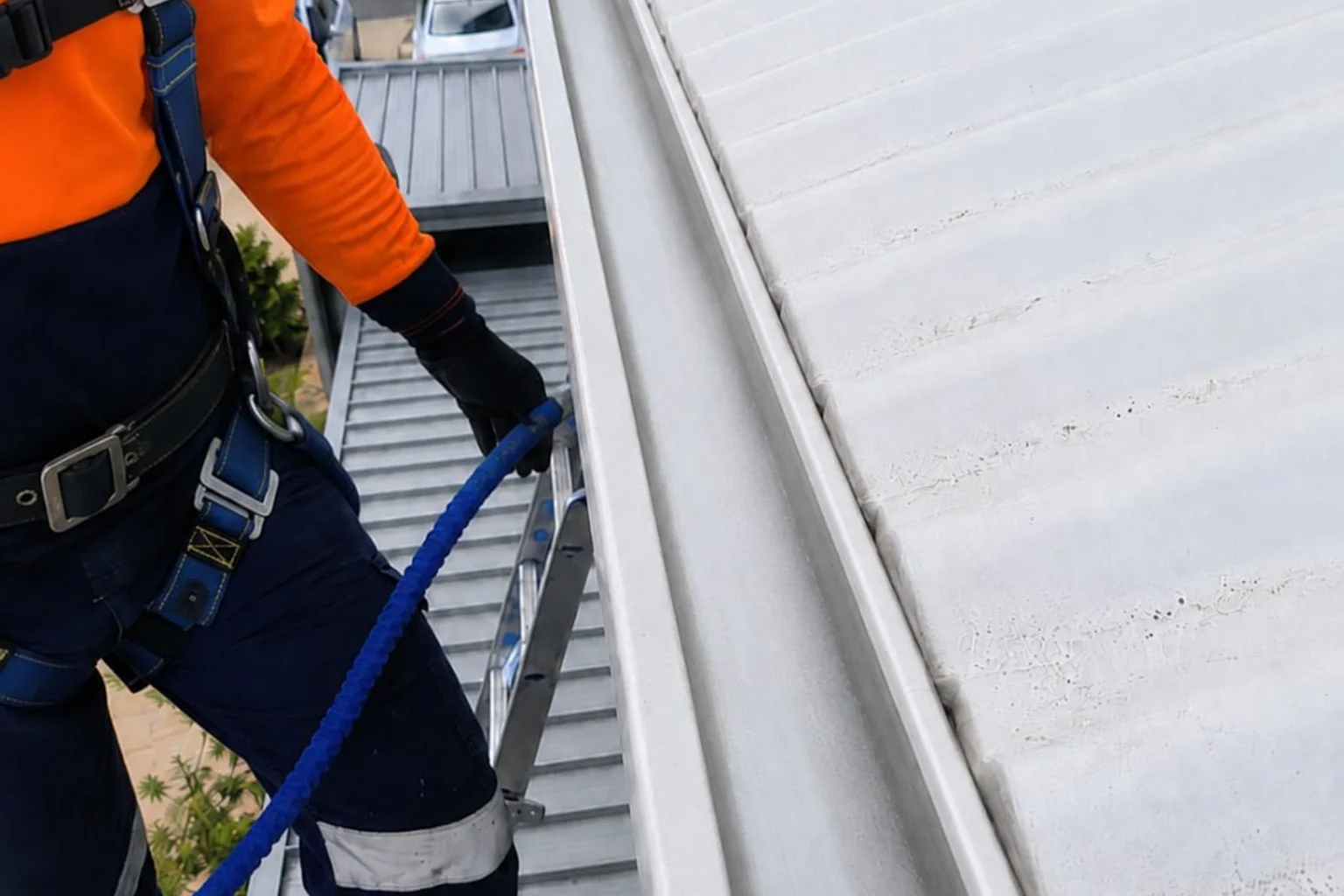
Getting onto a ladder to clear it is a different question. Working at height is where this job stops being simple, and wet roof edges in a Perth winter are the worst possible time to learn that.
If you would rather not, tell us your suburb, whether the home is single or double-storey and where you are seeing the overflow. That is enough for a starting price without anyone climbing anything.
Frequently asked questions
Usually, yes. A packed gutter or a blocked downpipe causes most overflow. The exception is water running down the wall behind the gutter, which points at fall or a failed seal rather than a blockage and needs a repair, not a clean.
A part-blocked gutter still drains a trickle, so light rain passes through the gap left in the debris. Heavy rain arrives faster than that gap can take, the channel fills and the water comes over the front edge.
If the cause is debris, yes, and normally the same day. If the gutter has sagged, pulled away from the fascia or was hung without enough fall, cleaning will not fix it and the run needs adjusting or rehanging instead.
Jesse, Owner of Perth Gutter Cleaning Pros
Jesse runs Perth Gutter Cleaning Pros, a family-operated Perth business. He has worked hands-on in gutter cleaning for close to three years, and the team is fully insured and Working at Heights trained. More about the team.